

The Meowlitia Archives
The Meowlitia Archives documents the ongoing war, characters, and survival of a post-human world ruled by feline resistance.
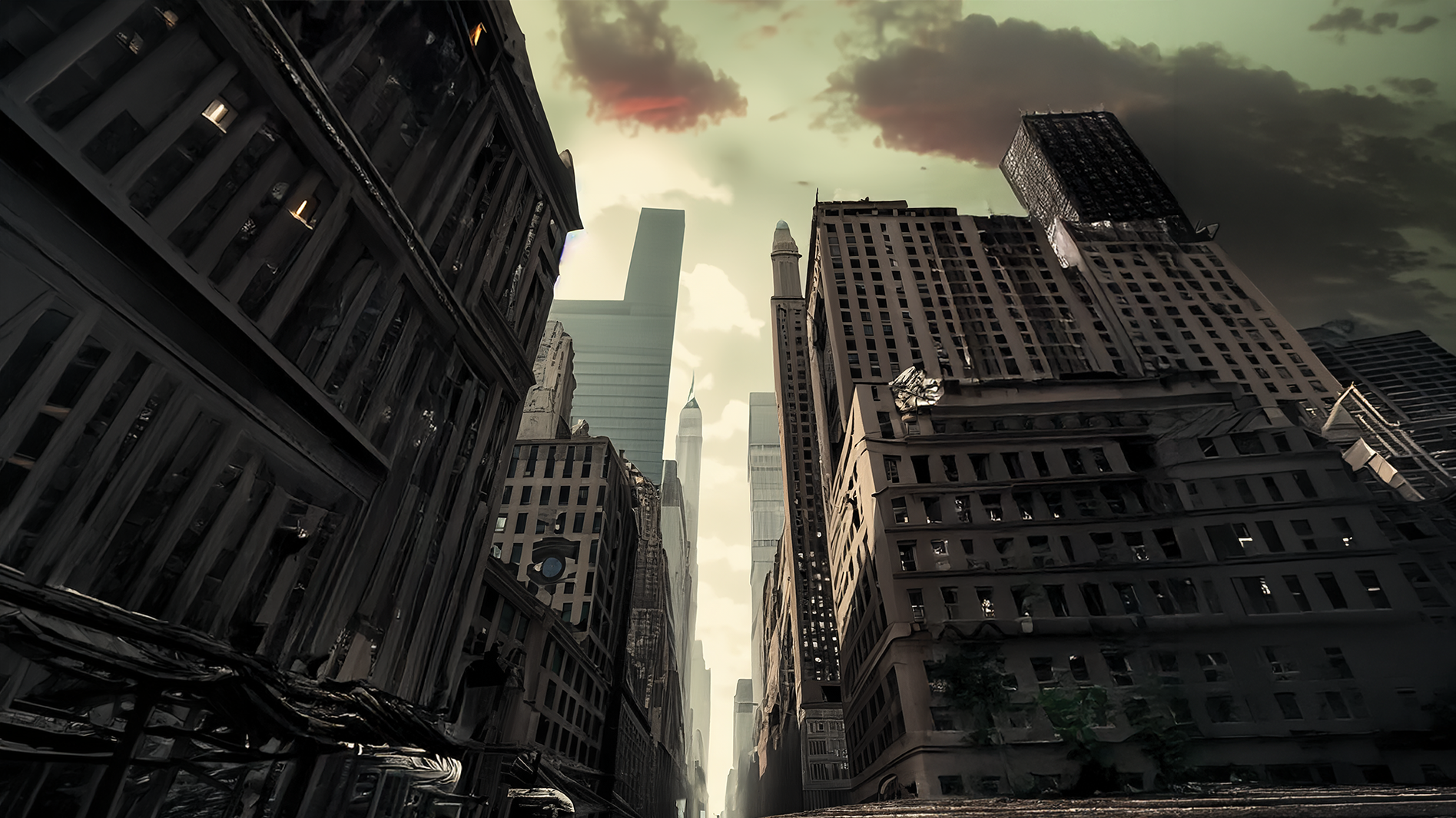
Day Zero – The Arrival of the Wraith (A Post-Apocalyptic Alien Invasion Story)
Day Zero marks the beginning of a post-apocalyptic alien invasion that erased human civilization in a matter of hours. Without warning, massive unidentified ships tore through the sky, unleashing a species now known as the Wraith. What followed was not a war—it was extinction. This is the moment the world ended, and the story of The Meowlitia began.
Day Zero marks the beginning of a post-apocalyptic alien invasion that erased human civilization in a matter of hours. Without warning, massive unidentified ships tore through the sky, unleashing a species now known as the Wraith. What followed was not a war—it was extinction. This is the moment the world ended, and the story of The Meowlitia began.
The End of the Human World
No warning. No signal. No diplomacy.
The end of the human world began in silence.
In the early hours before dawn, orbital satellites across the planet began to fail one by one. Communications networks flickered. Military tracking systems detected unidentified objects entering Earth’s atmosphere at impossible speeds.
By the time governments understood what was happening, it was already too late. The sky opened.
The Wraith Invasion
Massive black structures descended through the clouds above the world’s largest cities, hovering silently over population centers like predators studying their prey.
Then the weapons began to fire.
Columns of brilliant energy lanced down from the hovering structures—focused beams of alien light that cut through buildings, streets, and military installations with terrifying precision.
The Ash That Changed Everything
But the beams were not ordinary weapons.
Where they struck, human bodies did not burn. They disintegrated.
In an instant, millions of people were reduced to a strange gray ash—an irradiated dust that drifted through the streets and alleyways of the collapsing cities.
Entire populations vanished in moments.
Air forces launched desperate counterattacks, but human aircraft were destroyed before they could even reach the alien vessels. Missile defenses failed. Communication networks collapsed. The war for Earth lasted less than a single day.
Cities like Portland Oregon, New York City, Tokyo, and London burned beneath the alien bombardment while the last human militaries attempted a defense that never had time to organize.
Within twelve hours, the age of humanity was effectively over.
Power grids failed across continents. Satellites were destroyed in orbit. Governments went silent.
Human civilization collapsed into darkness.
The invaders would later be known by scattered resistance groups as The Wraith—an extraterrestrial force whose technology far exceeded anything Earth had ever seen.
They did not attempt to conquer humanity. They erased it.
In the days that followed, alien patrols began moving through the ruins, hunting the few surviving humans who had escaped the initial strikes.
But something unexpected had already begun to happen in the silent aftermath of the invasion.
The Mutation of Earth's Cats
The radioactive dust left behind by the Wraith’s weapons did not simply settle into the ruins of the old world. It spread.
The wind carried it through shattered streets, across rooftops, and into the hidden places where another species had survived the destruction.
The cats of Earth. Millions of them had lived alongside humanity for generations—inside homes, in alleyways, on rooftops, and beneath city streets.
When the ash of their former owners began to settle across the world, the radiation within it triggered something no one could have predicted. Mutation. Exposure to the dust transformed the surviving cats.
The Awakening
Their bodies changed—growing larger, stronger, and more upright in posture. Their paws adapted, gaining dexterity. Their minds sharpened, expanding with sudden bursts of intelligence.
But the transformation did something even stranger. The irradiated particles carried fragments of the humans they had once been.
Memories. Instincts. Personality traits. As the cats absorbed the dust, they also absorbed echoes of their former owners.
A guard dog’s cat developed the instincts of a protector.
A mechanic’s cat began to understand machines.
A soldier’s cat learned the language of combat.
Across the ruins of the world, the surviving cats began to change into something new. Something that had never existed before.
A hybrid of instinct, memory, and survival. The last inheritors of a dead civilization.
The First Signs of Resistance
Within weeks, scattered groups of these newly awakened survivors began forming small territorial bands to defend food supplies and safe shelters from the alien patrols moving through the ruins.
But survival alone would not be enough.
The Rise of Little Cat
Among the survivors, one leader would emerge who understood this better than any other.
A strategist.
A survivor.
A skater.
A cat whose mind carried the discipline and resolve of the world that had been lost.
Her name was Little Cat.
The Beginning of The Meowlitia
And from the radioactive ashes of humanity, she would begin organizing the scattered survivors into something the Wraith had not anticipated.
A resistance. A military. A force that would one day challenge the alien occupation of Earth.
From the ruins of the old world, Little Cat would forge the last organized defenders of the planet. The Meowlitia.
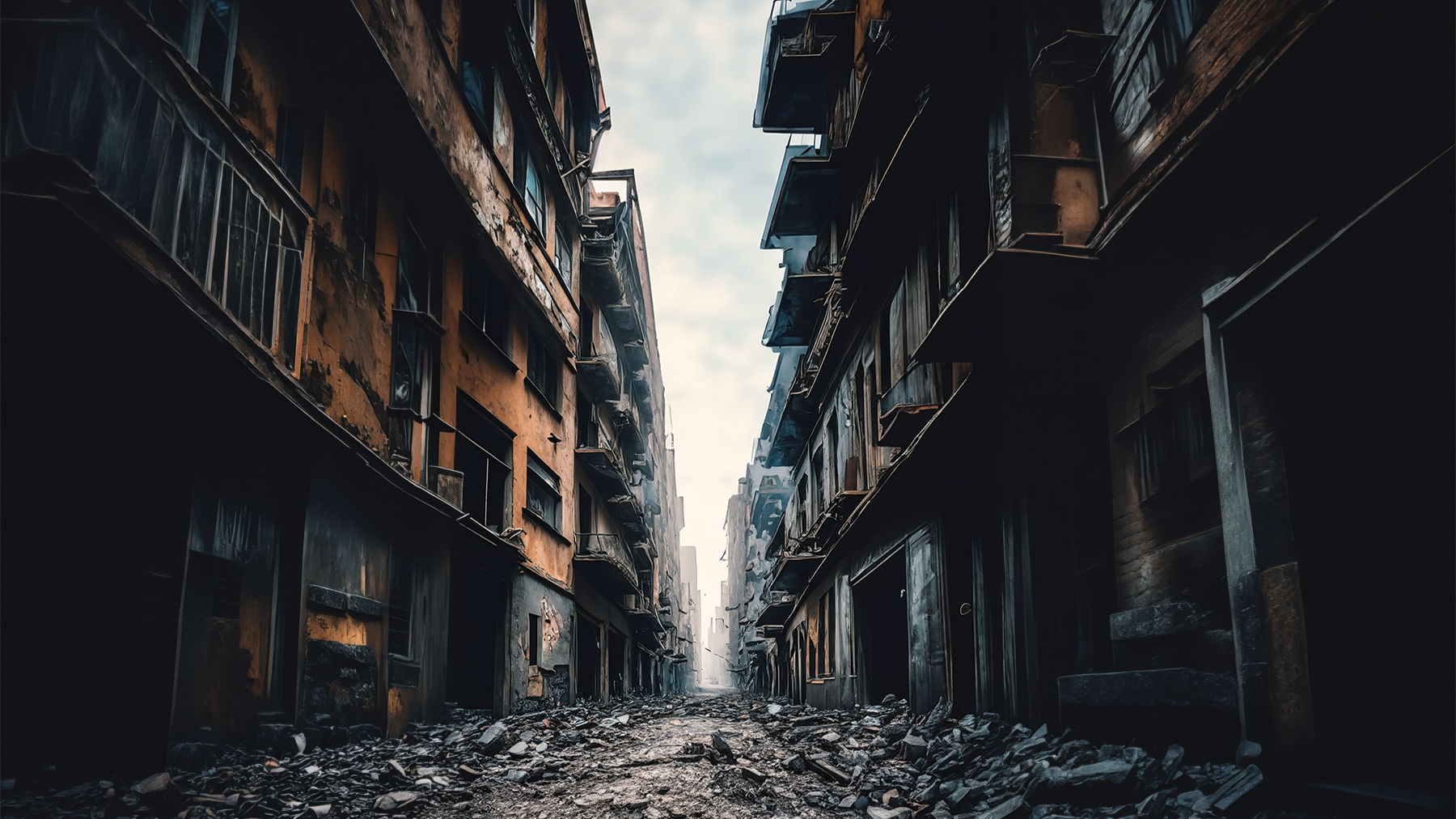
The Ashfall Oath – The Birth of a Post-Apocalyptic Resistance Movement
In the aftermath of a global collapse, a post-apocalyptic resistance movement emerged from the ruins of civilization. Known as The Meowlitia, this organized force was built on discipline, survival, and defiance against the alien occupation of Earth. The Ashfall Oath marks the moment that scattered survivors became something more—a unified military resistance against extinction.
In the aftermath of a global collapse, a post-apocalyptic resistance movement emerged from the ruins of civilization. Known as The Meowlitia, this organized force was built on discipline, survival, and defiance against the alien occupation of Earth. The Ashfall Oath marks the moment that scattered survivors became something more—a unified military resistance against extinction.
The World After Humanity
The world did not end all at once.
After the first day of the invasion, the fires burned for weeks.
Cities collapsed into silence as the last power grids died and the skies above Earth filled with drifting ash—the radioactive dust left behind by the Wraith’s annihilation weapons. Winds carried it through the skeletons of once-great cities, across highways choked with abandoned vehicles, and into the forgotten spaces where the survivors hid.
In those shadows, the cats of Earth were changing. The dust had altered them.
Bodies grew stronger. Limbs adapted for balance and dexterity. Minds awakened with a clarity that had never existed before. Along with this transformation came fragments of something else—faint echoes of human memory carried within the radioactive remains they had absorbed.
Knowledge. Instinct. Discipline.
Some remembered the sound of their owner’s voice. Others carried strange flashes of mechanical understanding, combat awareness, or problem-solving skills they had never learned.
Humanity had vanished—but pieces of it lived on within the survivors.
The Mutation of the Survivors
Across the ruins of cities like Seattle, San Francisco, and Portland, the survivors began forming small groups—territorial bands protecting food sources, shelter, and each other from the alien patrols that now roamed the broken world. But these groups were scattered, unorganized, and vulnerable.
The Wraith continued to move through the ruins with cold precision. Their machines swept through entire districts searching for signs of life, eliminating anything that resembled resistance.
Without unity, the new species born from the radioactive ashes of humanity would eventually share the same fate.
The survivors needed something more than instinct. They needed leadership.
The Gathering Beneath the Ruins
It was during the first winter after the invasion that the gathering took place.
Deep beneath the shattered remains of Old Town in Portland, within the infamous Shanghai Tunnels—an underground network once used by early dockworkers and bootleggers—survivors from multiple territories began to arrive.
Some were scouts who had crossed dangerous urban zones to reach the meeting point. Others were former house cats who had only recently learned to survive outside the homes that no longer existed. A few were hardened fighters who had already survived encounters with Wraith patrol units.
They came because word had begun spreading across the ruins of the Pacific Northwest.
A leader had emerged. Her name was Little Cat.
Little Cat’s Vision
Unlike many of the survivors, Little Cat carried within her mind something rare—clarity of purpose. The fragments of human memory she had absorbed were not random impulses or vague instincts.
They were strategic. Tactical. Disciplined.
She understood something the others were only beginning to realize. The Wraith were not invincible. They were organized. Which meant they could be fought the same way any military force was fought.
With structure. With strategy. With soldiers.
Inside the darkened Shanghai Tunnels, hundreds of survivors gathered in the dim glow of salvaged emergency lights. Ash drifted down through cracks in the ruined ceiling above them, coating the concrete floor in a pale gray layer.
Little Cat stepped forward.
She spoke of the world that had been lost—the civilization whose remnants still surrounded them in broken streets and hollow buildings. She spoke of the enemy that had taken it, and the fate that awaited every survivor if they remained scattered and alone.
Then she spoke of something new. A resistance. Not a loose band of survivors, but a disciplined fighting force organized for a single purpose:
Reclaiming Earth from the Wraith.
The Ashfall Oath
That night, the survivors standing together in the drifting radioactive ash swore the first oath of the new resistance. An oath not only to each other—but to the mission that would define their existence.
To defend the survivors. To reclaim the planet. To never allow the extinction of their kind.
The words spoken in that underground chamber would become the foundation of the resistance.
The Ashfall Oath.
From the ashes we were changed.
From the ruins we were awakened.
From this moment forward we stand as one.
We are the shield of the survivors.
We are the hunters in the dark.
We are the last soldiers of Earth.
We are The Meowlitia.
The Birth of The Meowlitia
In the months that followed, Little Cat began transforming the growing resistance into a structured military force. Command networks formed across surviving urban territories. Specialized divisions were created to handle reconnaissance, combat operations, supply logistics, and intelligence gathering.
Training camps were established within abandoned infrastructure where recruits learned how to fight the alien patrols that still dominated the surface.
The War Council was eventually formed to coordinate operations between resistance territories.
For the first time since the invasion began, the Wraith encountered something they had not expected to find on the ruined planet they believed conquered.
Organized opposition.
The war for Earth had begun. And in the radioactive ashes of humanity, a new army now stood ready to fight it. The Meowlitia.
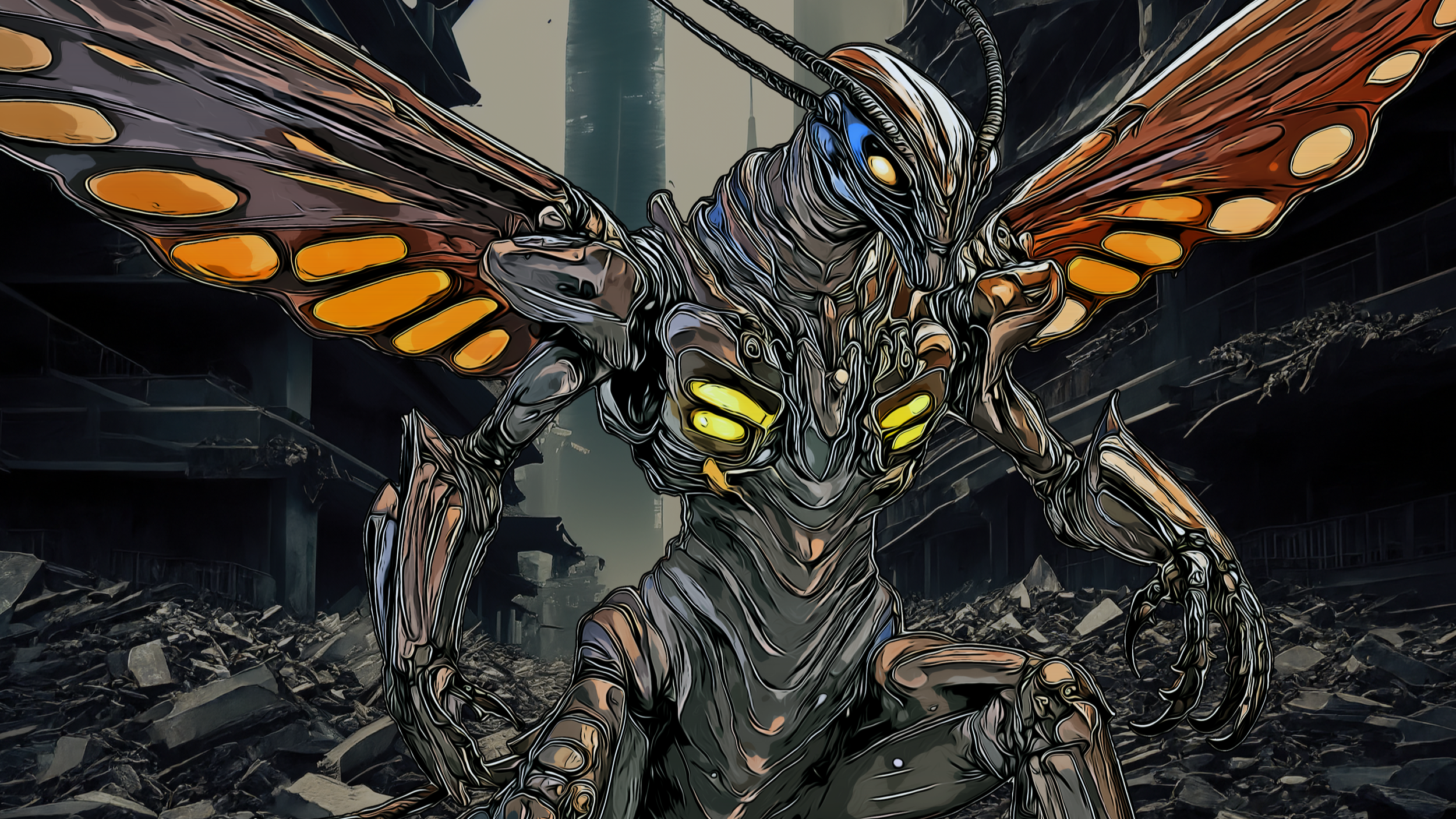
Wraith Species Intelligence Report – A Classified Alien Threat Analysis
The Wraith are an extraterrestrial species responsible for the sudden and total collapse of human civilization. This classified intelligence report documents what is currently known about the alien invasion force, including observed behavior, biological characteristics, and threat capabilities. Understanding the Wraith is critical to survival—and to any hope of organized resistance in this post-apocalyptic world.
The Wraith are an extraterrestrial species responsible for the sudden and total collapse of human civilization. This classified intelligence report documents what is currently known about the alien invasion force, including observed behavior, biological characteristics, and threat capabilities. Understanding the Wraith is critical to survival—and to any hope of organized resistance in this post-apocalyptic world.
MEOWLITIA ARCHIVES – CLASSIFIED FILE
Intelligence Designation
Hostile Species: WRAITH
Threat Classification: EXTINCTION-LEVEL INVASIVE FORCE
Operational Theater: Planet Earth
Status: Active Occupation
First Contact
The hostile extraterrestrial force now designated as The Wraith first appeared during the global extinction event known as Day Zero.
Without warning, unidentified orbital structures entered Earth’s atmosphere and positioned themselves above major population centers including New York City, Tokyo, and London.
From these platforms, the Wraith deployed energy-based annihilation weapons capable of reducing biological organisms to radioactive particulate matter. Within twelve hours, human civilization had collapsed.
The Wraith made no attempt to negotiate, communicate, or occupy human leadership structures. Their actions indicate that the invasion was never intended to conquer humanity. Its purpose was eradication.
Physical Description
Confirmed sightings of Wraith entities remain limited due to their preference for remote warfare and automated patrol systems.
Recovered battlefield observations describe them as:
Tall, elongated figures standing approximately 8–10 feet in height
Bodies encased in biomechanical armor
Limbs unusually long and angular in structure
Featureless or partially obscured facial region
A central luminous energy core located within the thoracic cavity
Movement patterns are described as deliberate and mechanical, suggesting either cybernetic augmentation or a partially synthetic biology.
Their presence generates measurable electromagnetic interference within nearby communications equipment.
Known Technology
The Wraith possess technological capabilities far exceeding those previously achieved by human civilization.
Orbital Annihilation Platforms
Large atmospheric structures capable of firing focused energy beams toward planetary surfaces. These beams disintegrate organic matter at the molecular level while leaving most infrastructure intact.
This technology was responsible for the extinction of the human population during Day Zero.
Hunter Drones
Autonomous patrol machines frequently deployed throughout ruined cities. Hunter drones conduct systematic sweeps searching for signs of biological activity.
Characteristics include:
Aerial and ground-based variants
Energy pulse weaponry
Thermal and electromagnetic scanning systems
Centralized command signals
Hunter drones represent the most common hostile contact encountered by Meowlitia operatives.
Surveillance Arrays
Wraith forces maintain a global sensor network used to monitor planetary activity.
Urban environments appear to interfere with certain scanning technologies, which has allowed resistance cells to survive within dense city ruins such as Portland and Seattle.
Combat Behavior
The Wraith demonstrate a highly structured operational doctrine.
Observed patterns include:
Systematic patrol sweeps through population centers
Immediate extermination of detected biological life
Heavy reliance on autonomous drones for surface operations
Minimal exposure of primary Wraith entities to direct combat
Unlike human militaries, Wraith forces show no evidence of emotional response, retreat behavior, or negotiation attempts.
Their actions indicate a purely objective-driven campaign.
Strategic Objective
The ultimate goal of the Wraith invasion remains unknown.
Current Meowlitia intelligence has developed several working theories:
Planetary Resource Acquisition
Earth may possess materials or biological resources required by the Wraith species.
Environmental Conversion
The annihilation of humanity may have been intended to prepare the planet for an unknown ecological transformation.
Biological Containment
Humanity itself may have been perceived as a threat that required elimination.
Unknown Directive
The Wraith may be operating under motives or strategic goals beyond current understanding.
At present, no confirmed communication from Wraith forces has ever been recorded.
Known Weaknesses
Although technologically superior, the Wraith are not invulnerable.
Early resistance engagements have revealed several tactical vulnerabilities.
Urban Terrain Limitations
Dense city infrastructure appears to disrupt portions of Wraith scanning technology.
This has allowed resistance cells to establish hidden bases within large metropolitan ruins, including underground locations such as the historic Shanghai Tunnels beneath Old Town in Portland.
Small-Unit Mobility
The evolved physiology of Meowlitia operatives provides exceptional agility and mobility within collapsed urban environments.
This advantage has allowed small strike teams to evade patrol routes and ambush Wraith drones.
Drone Command Signals
Captured drone fragments suggest that many Wraith machines rely on centralized command signals.
Disrupting these signals may degrade drone coordination during combat encounters.
Further research is ongoing.
Meowlitia Strategic Response
Following the formation of the resistance during The Ashfall Oath, the Meowlitia began developing a coordinated doctrine to combat the alien occupation.
Operational strategies currently include:
Urban guerrilla warfare
reconnaissance and intelligence gathering
sabotage of Wraith patrol systems
targeted drone destruction
territorial defense of survivor settlements
Early command centers were established beneath the ruins of Portland Oregon, while northern resistance forces later fortified territories near St. Johns Oregon to control access along the Willamette corridor.
From these positions, the Meowlitia continues to expand its operational network across the Pacific Northwest.
Current Assessment
The Wraith remain the dominant military force on Earth. However, the emergence of an organized resistance has introduced an unpredictable variable into their occupation strategy.
For the first time since Day Zero, the alien invaders face a coordinated opposition capable of learning, adapting, and fighting back.
The war for Earth is no longer one-sided.
And somewhere within the ruins of the old world, the soldiers of the Meowlitia continue preparing for the battles yet to come.
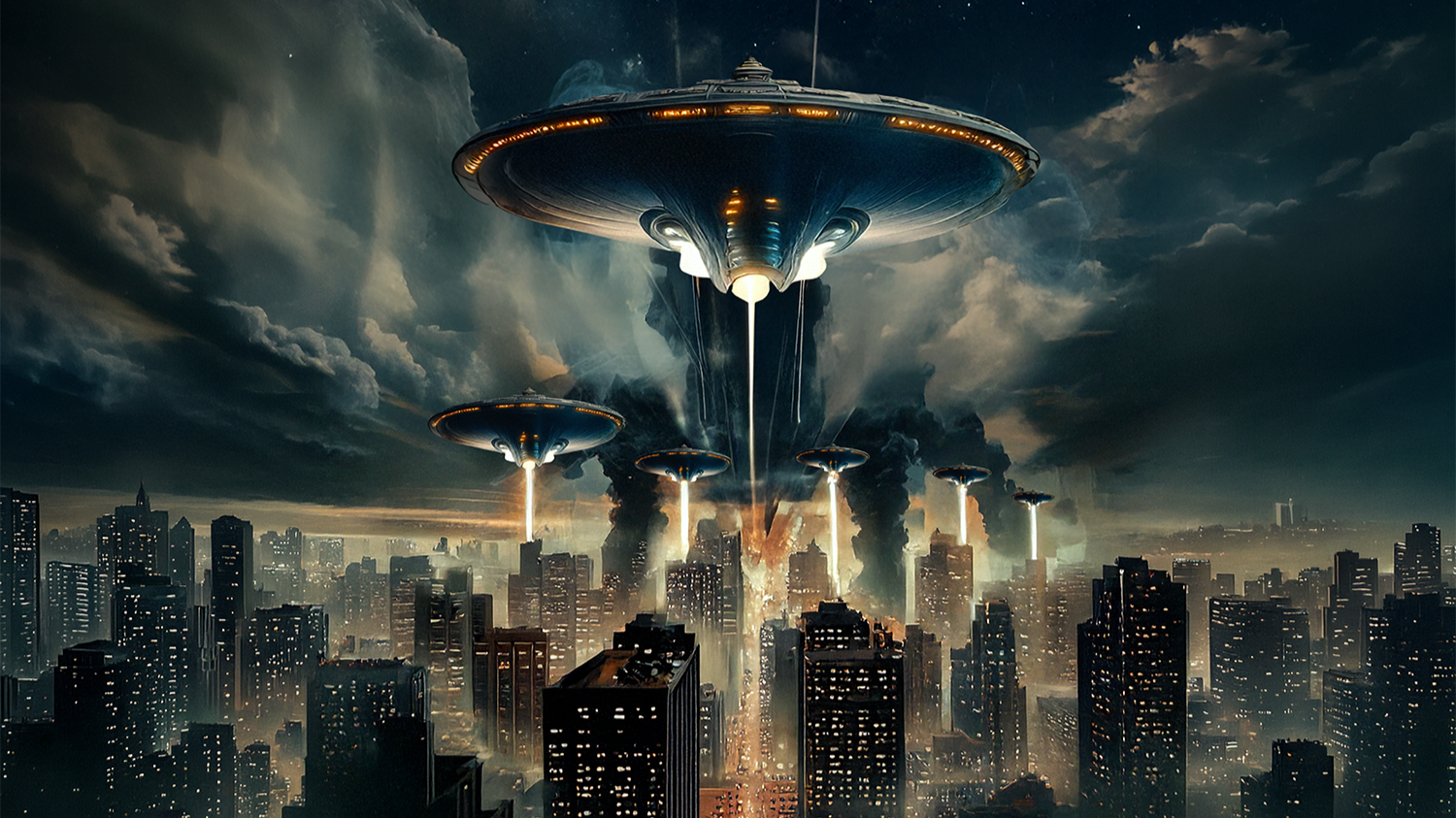
The Wraith War Timeline – A Post-Apocalyptic History of the End of Civilization
The Wraith War Timeline documents the complete collapse of human civilization following a catastrophic alien invasion. From the first moments of atmospheric breach to the rise of organized resistance forces like The Meowlitia, this timeline tracks the key events that reshaped the world into a post-apocalyptic battlefield. Every phase of the war reveals how quickly order fell—and how survival became the only objective.
The Wraith War Timeline documents the complete collapse of human civilization following a catastrophic alien invasion. From the first moments of atmospheric breach to the rise of organized resistance forces like The Meowlitia, this timeline tracks the key events that reshaped the world into a post-apocalyptic battlefield. Every phase of the war reveals how quickly order fell—and how survival became the only objective.
Day 0 — The Arrival of the Wraith
Unidentified alien structures enter Earth’s atmosphere and position themselves above major human population centers including New York City, Tokyo, and London.
Orbital energy weapons fire upon the planet.
Human beings struck by the beams are disintegrated into radioactive particulate matter. Within twelve hours, most global governments, military commands, and infrastructure networks collapse. Human civilization effectively ends in a single day.
Day 3 — Global Silence
Surviving human communications networks cease functioning. Satellite systems fall offline and electrical grids fail across entire continents.
Alien patrol drones begin systematic sweeps of major cities to eliminate remaining biological life. The Wraith establish uncontested control of Earth’s surface.
Day 12 — The Ash Mutation Event
Radioactive particulate matter left behind by Wraith weapons spreads through cities and settlements across the planet.
Cats exposed to this irradiated dust begin experiencing rapid biological mutation.
Physical changes include:
increased body size and strength
upright mobility
improved dexterity
accelerated cognitive development
Many survivors also begin exhibiting fragments of human memory and behavior inherited from their former owners. A new species has emerged.
Day 90 — First Survivor Bands
Mutated survivors begin forming small territorial groups inside ruined cities. These early bands focus on survival—protecting food sources, shelter, and territory from alien patrol drones. Primitive communication and scouting networks begin forming between groups operating in cities like Seattle and Portland. However, the bands remain disorganized and vulnerable.
Day 212 — The Gathering Beneath the Ruins
Word spreads among survivor territories of a strategist known as Little Cat. Representatives from multiple survivor bands travel to a secret meeting point beneath Old Town in Portland.
The meeting takes place inside the historic underground network known as the Shanghai Tunnels.
This gathering becomes the first large assembly of the evolved survivors.
Day 213 — The Ashfall Oath
Inside the tunnels beneath Portland, Little Cat delivers a speech calling for unity and organized resistance. The assembled survivors swear a binding pledge that becomes known as The Ashfall Oath. The resistance force known as The Meowlitia is officially formed.
The tunnels are later recorded in Meowlitia history as FOB Ashfall, the birthplace of the resistance.
Year 1 — The First Resistance Operations
The newly formed Meowlitia begins conducting small-scale operations against Wraith patrol drones. Urban terrain proves advantageous to the agile fighters of the resistance. Early victories against isolated drones demonstrate that Wraith technology can be destroyed through coordinated ambush tactics.
Morale among survivor territories increases.
Year 2 — Expansion of the Resistance Network
Meowlitia command establishes hidden safe zones throughout the Pacific Northwest. One of the most important early territories emerges in the district of St. John’s located in North Portland. Due to its industrial ruins and access to the Willamette River corridor, the area becomes a strategic supply and training hub for the growing resistance.
The sector is later designated Northern Command.
Year 3 — Formation of the War Council
As the resistance expands, Little Cat establishes a centralized leadership structure known as the War Council. The council coordinates intelligence, logistics, and combat operations across multiple territories.
Specialized divisions of the Meowlitia begin forming, including:
Urban Warfare Command
Recon & Intelligence Division
Field Sustainment Corps
Shock & Breach Division
Anomaly Response Unit
For the first time since the invasion, the Wraith encounter an organized planetary resistance.
Year 5 — The Hidden War
The Meowlitia now operates across multiple ruined metropolitan regions of the Pacific Northwest. Wraith patrol activity increases as the alien occupation begins responding to growing resistance attacks. Urban guerrilla warfare becomes the primary strategy of the Meowlitia.
Strike teams sabotage drones, gather intelligence, and protect surviving settlements. The conflict has officially become a prolonged war.
Present Day — The War for Earth Continues
The Wraith remain the dominant military force on the planet. However, the resistance created beneath the ruins of Portland continues to grow. Across hidden tunnels, abandoned factories, and shattered city streets, new recruits train and prepare for future battles.
The war that began on Day Zero is far from over.
And somewhere in the ruins of the old world, the soldiers of The Meowlitia are still fighting to reclaim their planet.
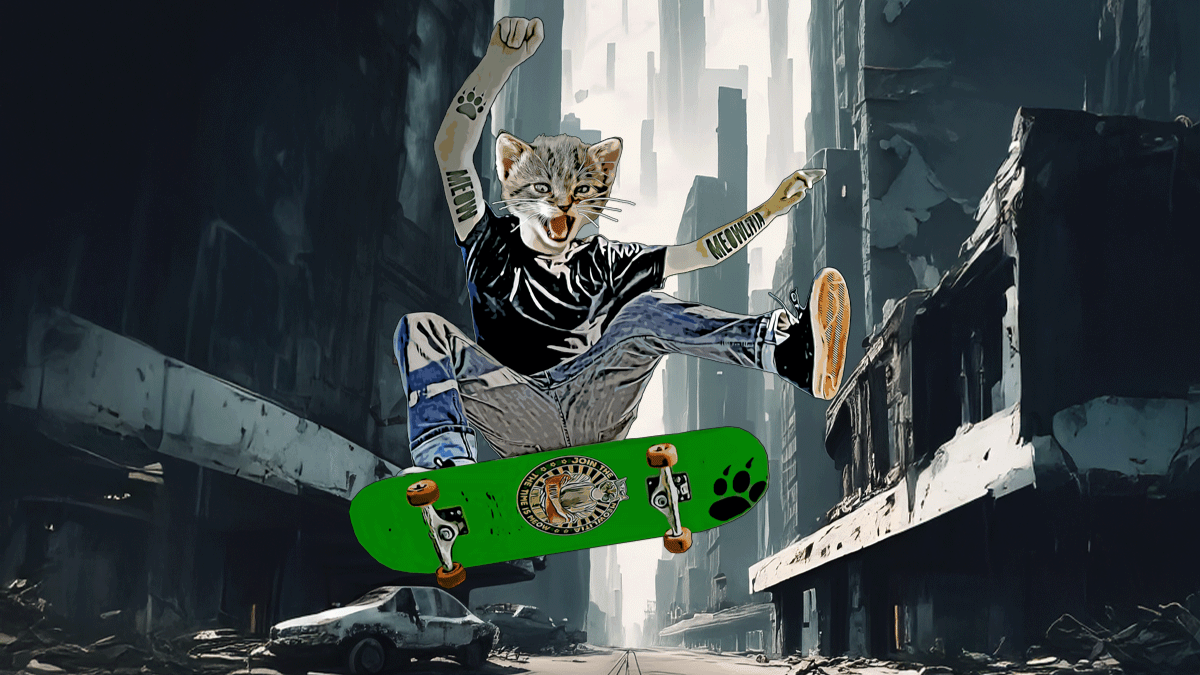
The History of Graphic T-Shirts in Skate Culture
Learn how graphic t-shirts became a defining part of skateboarding culture and influenced the rise of modern streetwear, independent brands, and storytelling-driven apparel. Skateboarding has always been more than a sport. Since its earliest days, skate culture has been built around creativity, individuality, and self-expression.
Skateboarding has always been more than a sport. Since its earliest days, skate culture has been built around creativity, individuality, and self-expression. While skateboards themselves became canvases for artwork and design, graphic t-shirts quickly evolved into another powerful way for skaters to communicate identity, support their favorite brands, and showcase the culture they belonged to.
Today, graphic apparel is one of the most recognizable aspects of skateboarding culture. From iconic logos and hand-drawn illustrations to original characters and storytelling-driven designs, graphic t-shirts have helped define the visual identity of skateboarding for decades.
The Early Days of Skate Graphics
During the 1970s and early 1980s, skateboarding was still a relatively small subculture. Many companies focused primarily on producing boards and equipment, but artwork quickly became an important part of the culture.
Board graphics allowed riders to express personality and stand out from the crowd. As skateboarding grew, those same visual ideas began appearing on stickers, posters, and eventually apparel.
Graphic t-shirts became a natural extension of the artwork skaters already connected with through their boards and local scenes.
Building Identity Through Apparel
Unlike traditional athletic uniforms, skateboarding encouraged individuality. Graphic t-shirts gave skaters a way to represent:
Local skate crews
Independent brands
Artists and illustrators
Skate shops
Personal style
The shirt someone wore often communicated more than a logo. It reflected their influences, community, and creative interests. This emphasis on personal identity helped establish graphic apparel as a central part of skate culture.
The Rise of Independent Skate Brands
As skateboarding expanded throughout the 1980s and 1990s, independent brands began developing strong visual identities. Many of these companies relied heavily on graphic design to differentiate themselves. Artists created memorable characters, mascots, logos, and illustrations that became instantly recognizable throughout the skateboarding community.
In many cases, the graphics themselves became just as important as the products they appeared on. Graphic t-shirts evolved from simple merchandise into collectible pieces of skate culture.
Art and Storytelling
One reason graphic apparel remains so influential in skateboarding is its ability to tell stories. A powerful design can communicate humor, rebellion, creativity, or an entire fictional world through a single image.
Many modern apparel brands have expanded beyond logos and embraced character-driven storytelling, creating narratives that connect customers to something larger than a product.
This approach reflects the same creative spirit that has always existed within skateboarding culture.
The Influence on Modern Streetwear
The relationship between skateboarding and streetwear is now impossible to ignore. As explored in “Why Skateboarding and Streetwear Have Always Been Connected” many elements commonly associated with modern streetwear originated within skate culture:
Graphic t-shirts
Hoodies
Independent brand identities
Limited releases
Artist collaborations
Community-driven marketing
As streetwear evolved, graphic apparel remained one of its most important forms of self-expression. The influence of skateboarding can still be seen throughout contemporary fashion and independent clothing brands.
The Meowlitia and Story-Driven Apparel
The Meowlitia draws inspiration from the same tradition of visual storytelling that helped shape skate culture. This approach shares many characteristics with dystopian fashion, a style that combines storytelling, survival themes, and distinctive visual identities to create apparel that feels connected to a larger world.
Rather than focusing solely on logos, The Meowlitia builds a larger fictional universe around its designs. Characters such as Little Cat, the Wraith, and the feline resistance movement exist within an ongoing post-apocalyptic narrative that gives additional meaning to the artwork featured on the apparel.
Like the most memorable graphics in skateboarding history, the goal is not simply to create clothing, but to create stories people can connect with.
Why Graphic T-Shirts Continue to Matter
Decades after their introduction into skate culture, graphic t-shirts remain one of the most effective ways to communicate creativity and identity.
Whether representing a local skate shop, an independent brand, an artist, or an original fictional universe, graphic apparel allows people to express who they are and what inspires them.
The continued popularity of graphic t-shirts demonstrates that clothing can be more than functional. It can be a form of storytelling, a piece of art, and a reflection of the communities and ideas that shape our lives.
Final Thoughts
The history of graphic t-shirts in skate culture is ultimately a story about creativity and self-expression.
From early board graphics and local skate crews to modern streetwear brands and storytelling-driven apparel, graphic design has played a central role in shaping skateboarding's identity.
As skate culture continues to evolve, graphic t-shirts remain one of its most enduring and influential forms of artistic expression.
Related Reading
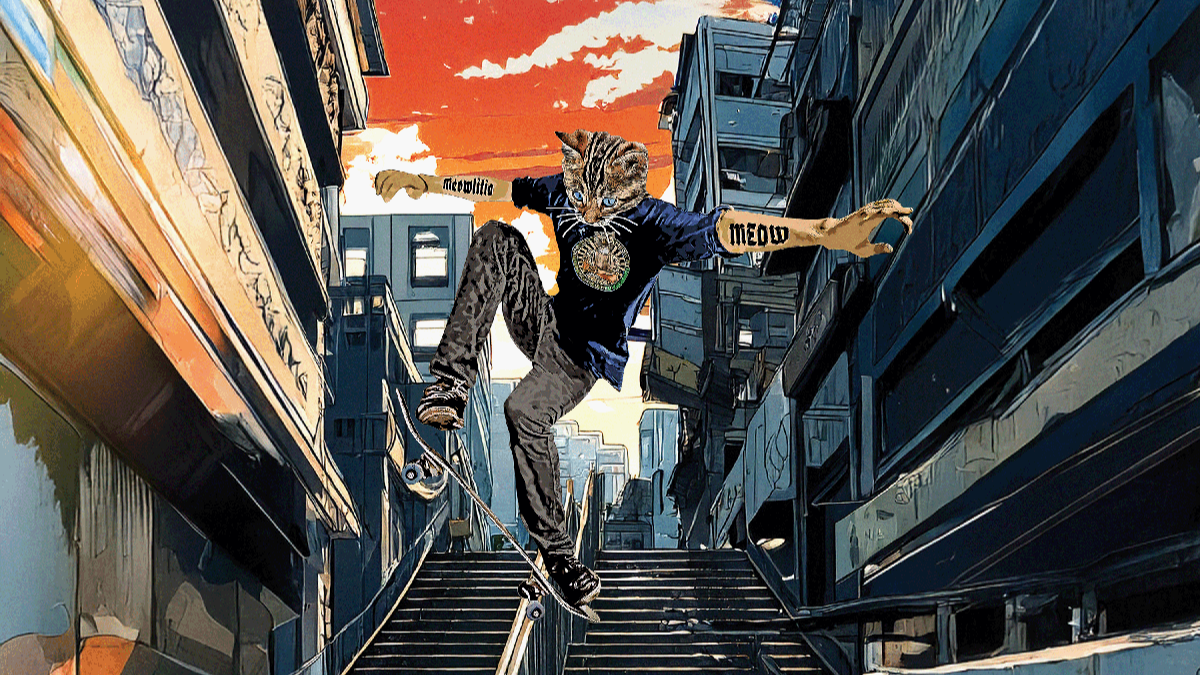
Why Skateboarding and Streetwear Have Always Been Connected
Skateboarding and streetwear have been linked for decades. While many people view them as separate cultures, the truth is that modern streetwear owes much of its identity to skateboarding. From graphic t-shirts and hoodies to independent brands and creative self-expression, skate culture helped shape many of the trends that define streetwear today.
Skateboarding and streetwear have been linked for decades. While many people view them as separate cultures, the truth is that modern streetwear owes much of its identity to skateboarding. From graphic t-shirts and hoodies to independent brands and creative self-expression, skate culture helped shape many of the trends that define streetwear today.
What began as a small counterculture movement eventually grew into a global influence on fashion, art, music, and design. Understanding the connection between skateboarding and streetwear helps explain why the two remain closely intertwined.
The Early Days of Skate Culture
Skateboarding emerged as a unique subculture built around creativity, individuality, and a willingness to challenge convention. Unlike traditional team sports, skateboarding encouraged personal style and self-expression.
As the culture grew, skateboarders began creating their own visual identity. Clothing became a way to communicate membership within the community while also expressing individuality. Graphic t-shirts, worn sneakers, hoodies, and durable apparel became common features of skate culture long before streetwear became a recognized fashion category.
The Rise of Independent Brands
One of the most important connections between skateboarding and streetwear is the rise of independent brands.
Many early skate companies were created by skaters for skaters. These brands were not built around luxury or high fashion. They were built around shared experiences, creative expression, and community.
Graphic artwork, logos, stickers, and apparel became ways for skateboarders to support the culture they loved. Over time, these designs developed identities of their own and helped establish the foundation for modern streetwear branding.
Why Graphics Matter
Skateboarding has always been a visual culture.
Deck graphics, stickers, videos, photography, and apparel all contribute to the storytelling surrounding the sport. A graphic t-shirt is often more than just clothing—it can represent a crew, a philosophy, a lifestyle, or an entire fictional world.
This emphasis on storytelling is one reason skate culture continues to influence modern apparel brands. Strong graphics create emotional connections and help transform clothing into something more meaningful than a simple product.
Self-Expression Through Clothing
Both skateboarding and streetwear share a common principle: individuality.
People are often drawn to these cultures because they offer opportunities to express identity through personal style. Rather than following strict rules, both communities celebrate creativity, originality, and authenticity.
Whether through artwork, clothing, or personal style choices, self-expression remains one of the strongest links between skateboarding and streetwear.
The Influence of Storytelling
Modern streetwear increasingly incorporates storytelling, characters, and fictional universes into apparel design.
Rather than focusing solely on logos, many independent brands build entire worlds around their products. Characters, lore, and ongoing narratives allow customers to become part of something larger than a clothing brand.
This approach reflects the same creative spirit that has long existed within skateboarding culture.
The Meowlitia and Skate-Inspired Streetwear
The Meowlitia combines post-apocalyptic storytelling with streetwear influences rooted in creativity, individuality, and resilience. Throughout the Meowlitia universe, skateboarding represents freedom, self-expression, and the refusal to surrender in the face of overwhelming odds.
Characters such as Little Cat and other members of The Meowlitia navigate a world shaped by conflict and survival, while maintaining the rebellious spirit that has always been central to skate culture.
Like skateboarding itself, The Meowlitia is built around the idea that creativity can endure even in the most challenging environments.
Final Thoughts
The connection between skateboarding and streetwear is not accidental. Both cultures emerged from communities that valued creativity, independence, and self-expression.
From graphic t-shirts and independent brands to storytelling and personal identity, skateboarding helped establish many of the foundations that continue to influence streetwear today.
As both cultures continue to evolve, their shared commitment to originality and creativity ensures that the relationship between skateboarding and streetwear will remain strong for years to come.
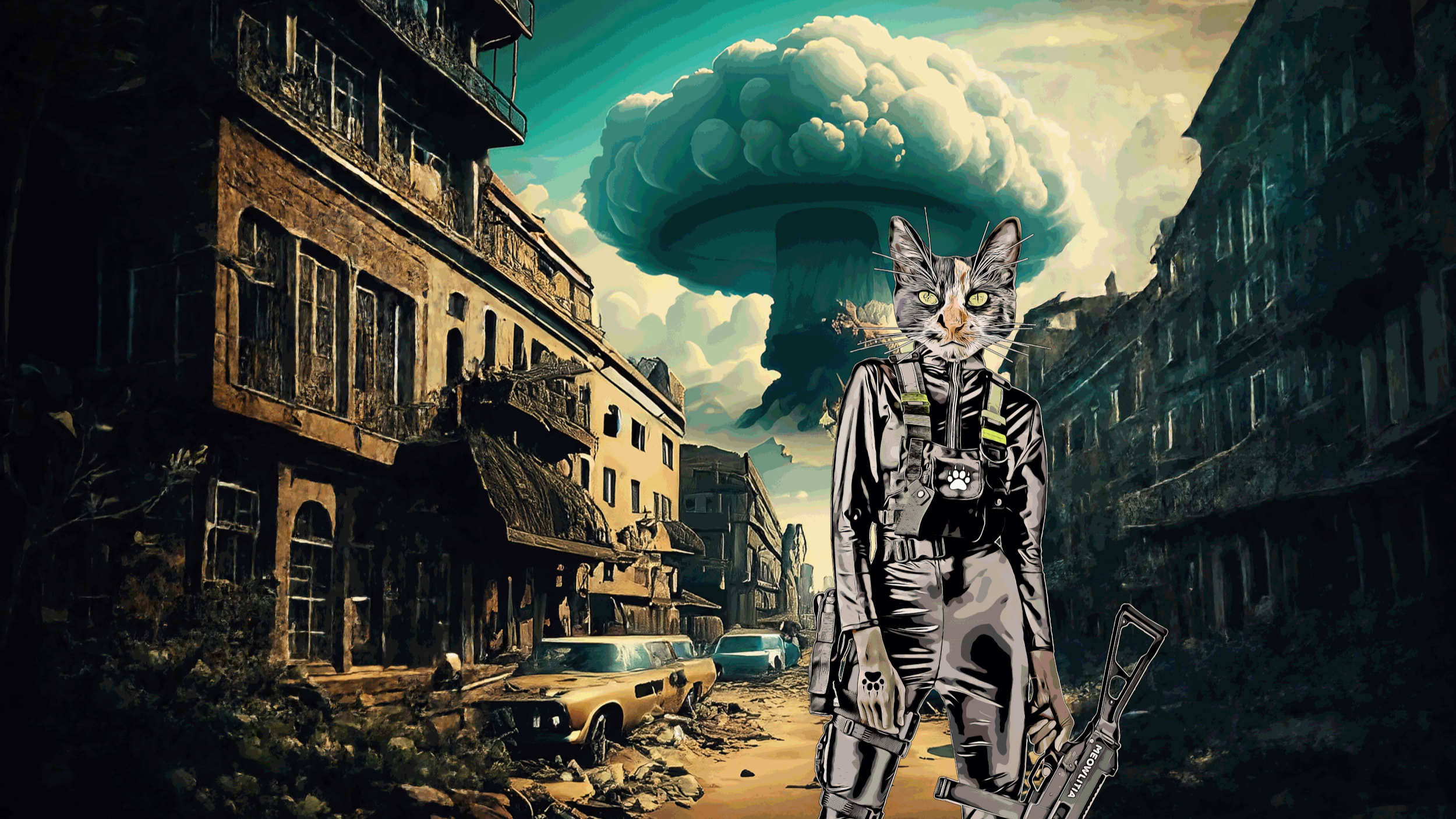
What Is Dystopian Fashion? A Complete Guide to Post-Apocalyptic Style
Learn what dystopian fashion is, where it comes from, and why post-apocalyptic clothing and storytelling-driven streetwear continue to grow in popularity.
Dystopian fashion is a clothing style inspired by fictional worlds where society has collapsed, governments have fallen, resources are scarce, and survival has become a daily struggle. Drawing influence from post-apocalyptic films, science fiction, cyberpunk culture, military aesthetics, and survival gear, dystopian fashion combines functionality with visual storytelling to create a look that feels rugged, rebellious, and battle-tested.
While the style often appears in movies, video games, and graphic novels, dystopian fashion has increasingly influenced modern streetwear, allowing people to express individuality through clothing that reflects resilience, independence, and resistance.
Origins of Dystopian Fashion
The roots of dystopian fashion can be traced to decades of science fiction and post-apocalyptic storytelling. Popular films, novels, and games imagined futures where civilization had been transformed by war, environmental disaster, technological collapse, or extraterrestrial invasion.
These fictional worlds shared a common visual language:
Weathered materials
Utility-focused clothing
Military-inspired equipment
Improvised protective gear
Functional layering
Symbols of rebellion and resistance
Rather than emphasizing luxury or status, dystopian fashion celebrates survival and adaptability.
Common Characteristics of Dystopian Fashion
Although styles vary, several elements consistently appear throughout dystopian clothing and streetwear.
Utility and Function
Dystopian fashion often incorporates practical design elements such as cargo pockets, tactical straps, reinforced materials, and layered garments. The clothing appears ready for action rather than purely decorative.
Weathered and Worn Appearance
Many dystopian-inspired designs feature distressed textures, faded graphics, battle-worn aesthetics, and signs of use. These details help create the impression of a world shaped by conflict and survival.
Military Influence
Military uniforms, tactical equipment, resistance movements, and battlefield imagery frequently inspire dystopian clothing. These influences communicate preparedness, discipline, and determination.
Symbolism and Storytelling
Unlike many fashion trends, dystopian fashion often tells a story. Graphics, insignias, faction symbols, and fictional worldbuilding elements can transform clothing into part of a larger narrative.
Why Dystopian Fashion Has Become Popular
In recent years, dystopian fashion has grown beyond science fiction fandoms and become part of broader streetwear culture.
Many people are drawn to the style because it represents:
Self-reliance
Resilience
Rebellion against conformity
Individual identity
Creative storytelling
The appeal is not necessarily about imagining the end of the world. Instead, it reflects a fascination with overcoming adversity and adapting to difficult circumstances.
Dystopian Fashion and Streetwear
Modern dystopian streetwear blends post-apocalyptic aesthetics with contemporary fashion trends.
Graphic apparel, tactical-inspired designs, military influences, and fictional worldbuilding have become increasingly common within independent clothing brands. Many of these brands create entire universes around their products, allowing customers to connect with characters, stories, and larger narratives.
This combination of storytelling and apparel creates a deeper connection between clothing and personal identity.
The Meowlitia and Post-Apocalyptic Fashion
The Meowlitia represents one example of dystopian fashion built around an original fictional universe.
Set in a post-apocalyptic world following the arrival of the alien species known as the Wraith, The Meowlitia follows a feline resistance movement fighting to reclaim Earth after the collapse of human civilization. Characters such as Little Cat, military organizations, resistance strongholds, and ongoing conflicts form the foundation of the world behind the apparel.
Rather than simply displaying graphics, dystopian fashion brands often use storytelling to create meaning behind the designs they produce.
The Future of Dystopian Fashion
As fashion continues to intersect with gaming, science fiction, storytelling, and independent creative brands, dystopian aesthetics are likely to remain an influential part of modern streetwear culture.
The combination of survival themes, military inspiration, and fictional worldbuilding offers a unique way for people to express individuality while participating in stories larger than themselves.
Whether inspired by post-apocalyptic fiction, resistance movements, or imaginative future worlds, dystopian fashion continues to evolve as one of the most distinctive styles in modern apparel.
Final Thoughts
Dystopian fashion is more than a visual style. It is a form of storytelling expressed through clothing.
By combining survival-inspired aesthetics, military influences, and fictional worldbuilding, dystopian fashion allows people to wear symbols of resilience, determination, and imagination. As new creators continue building original worlds and narratives around their designs, the genre will likely continue growing far beyond its science fiction origins.
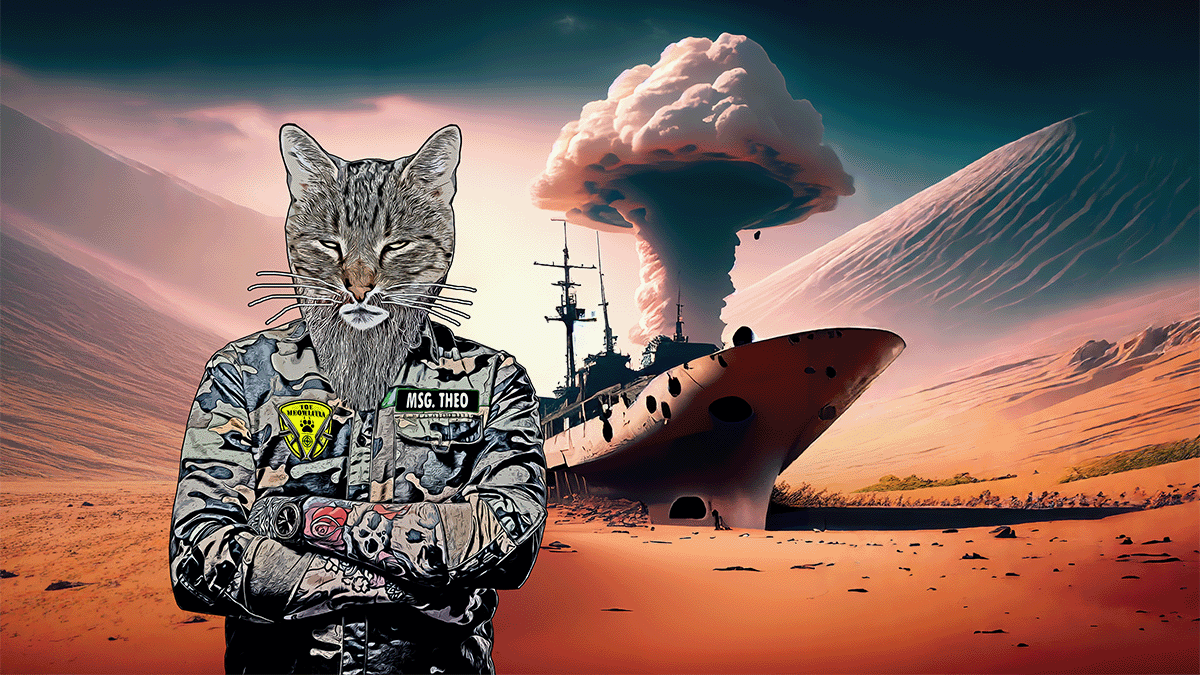
Best Cat Streetwear Brands (And Why They’re Trending)
Discover the best cat streetwear brands and why this unique style of graphic apparel is rapidly growing in popularity.
Cat streetwear brands are gaining serious momentum as graphic apparel continues to evolve beyond basic designs. What started as playful or novelty clothing has shifted into something more expressive—blending bold visuals, underground culture, and storytelling. Today, cat-themed streetwear sits at the intersection of fashion, identity, and art, attracting both streetwear fans and collectors looking for something different.
What Is Cat Streetwear?
Cat streetwear is a niche within fashion that combines feline-inspired graphics with modern streetwear design. Unlike traditional cat apparel, which often leans toward humor or simplicity, this new wave focuses on strong visuals, cultural influence, and individuality.
It draws heavily from:
Skateboarding culture
Punk and underground scenes
Graphic-heavy apparel design
The result is clothing that feels less like novelty—and more like a statement.
Why Cat Streetwear Is Trending
There are a few key reasons this style is growing fast.
First, streetwear itself has shifted toward identity-driven fashion. People want what they wear to represent something—whether that’s humor, attitude, or worldview.
Second, bold graphic design is dominating apparel. Clean logos are being replaced by:
Detailed illustrations
Character-driven art
Story-based visuals
Finally, niche communities are stronger than ever. Fans of cats, streetwear, and alternative fashion are overlapping in ways that didn’t exist before.
Top Cat Streetwear Brands
The Meowlitia
A post-apocalyptic cat streetwear brand built around a cinematic universe where feline resistance fights an alien invasion. Each design connects to a larger story, blending fashion with worldbuilding.
Ripndip
One of the most recognizable cat-themed brands, known for its playful and rebellious style, rooted in skate culture.
A Bathing Ape (BAPE)
While not exclusively cat-focused, BAPE’s graphic-heavy approach has influenced how animal imagery is used in streetwear.
Online Independent Designers
Platforms like Etsy and small-run brands are pushing unique cat designs into more experimental and artistic directions.
How This Connects to The Meowlitia
While many brands use cats as mascots or visual elements, The Meowlitia takes a different approach.
Here, cats are not symbols—they are the story.
Every character exists within a structured world shaped by conflict, survival, and resistance. Designs are not just graphics, but fragments of a larger narrative that continues to expand.
This creates a deeper connection between the wearer and the brand—something that goes beyond traditional apparel.
Final Thoughts
Cat streetwear is no longer just a niche—it’s an evolving space where creativity, culture, and identity intersect.
As more brands enter the market, those that offer something beyond surface-level design will stand out. Whether through storytelling, artistic direction, or cultural influence, the future of this style will be shaped by those willing to push it further.
The Meowlitia is one of those brands—and it’s only just getting started.
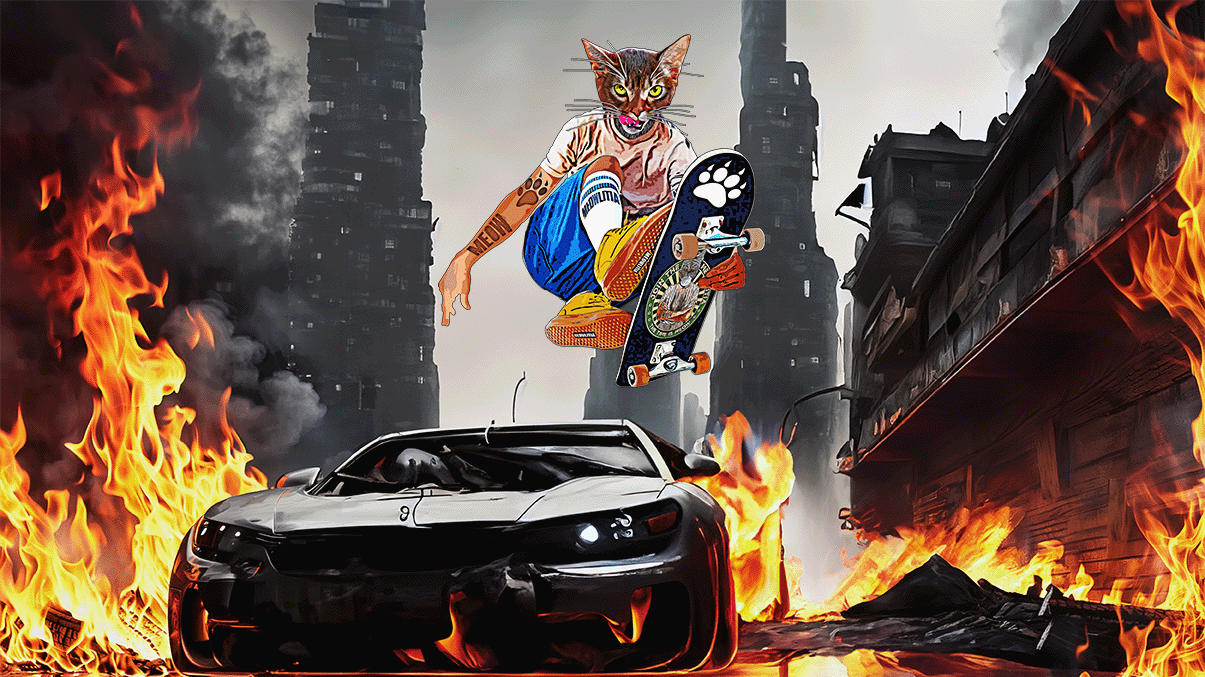
What Is The Meowlitia? A Post-Apocalyptic Cat Streetwear Brand
A post-apocalyptic cat streetwear brand built on storytelling, survival, and a war against the alien force known as the Wraith.
The Meowlitia is a cat-themed streetwear brand built around a post-apocalyptic world where humanity has fallen—and cats now fight to survive what’s left.
At its core, The Meowlitia blends skateboarding culture, underground streetwear, and cinematic storytelling into a single universe. Every design, character, and graphic is part of an ongoing war against an alien force known only as the Wraith.
This isn’t just apparel—it’s a narrative.
In the world of The Meowlitia, the skies burned first. Massive alien ships fractured the atmosphere in an event now known as Day Zero. Cities collapsed. Governments vanished. What remained wasn’t humanity—it was silence… and survival.
From that silence, The Meowlitia was formed.
A disciplined resistance led by a figure known as Little Cat, The Meowlitia operates as a structured military force. Units are organized, doctrines are followed, and every member has a role in the ongoing fight against extinction.
Each piece of clothing represents part of that world:
Battle-tested characters
Classified missions
Locations pulled from a shattered Earth
But outside the story, the brand is rooted in real-world influence:
Skateboarding. Punk rock. Anti-establishment culture.
The Meowlitia exists at the intersection of all three.
For those just discovering it, this is your entry point.
For those already inside it…
You already know this is just the beginning.
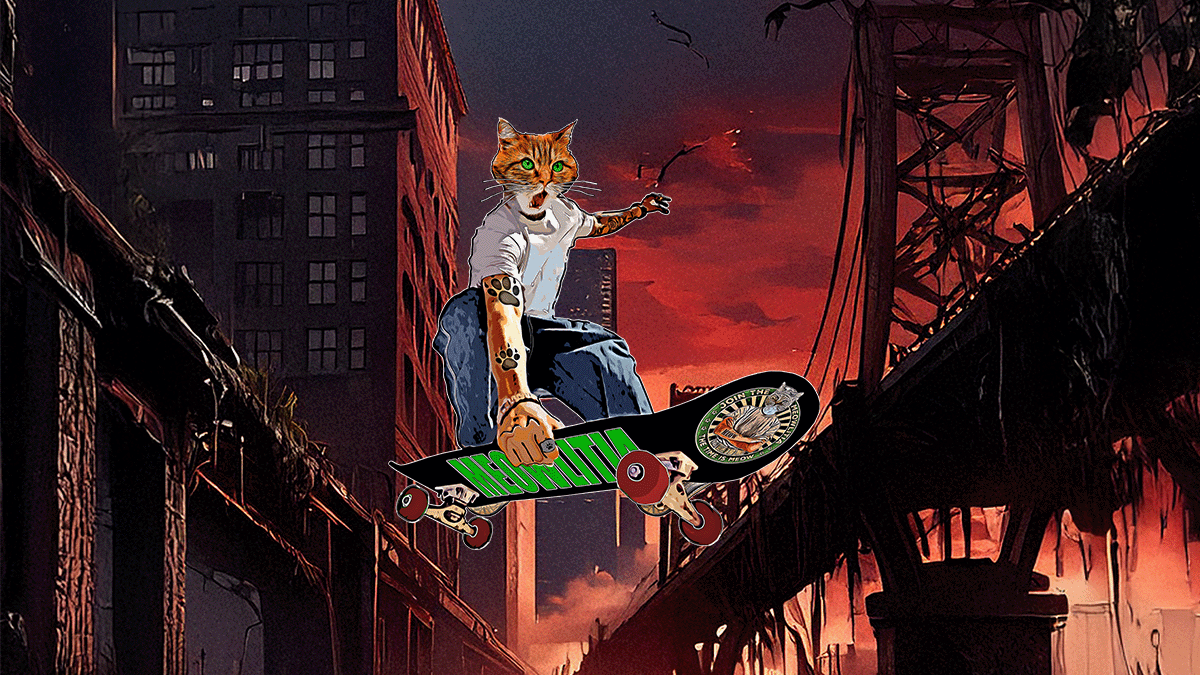
Post-Apocalyptic Streetwear: What It Is and Why It’s Taking Over
Explore the rise of post-apocalyptic streetwear and how survival aesthetics, dystopian themes, and skate culture are shaping modern fashion.
Post-apocalyptic streetwear is more than a trend—it’s a reflection of a world that feels increasingly unstable.
Inspired by destroyed cities, survival gear, and dystopian storytelling, this style blends raw functionality with aggressive, worn-in aesthetics. Think layered fabrics, military influence, distressed textures, and designs that look like they’ve survived something catastrophic.
But where most brands stop at visuals, The Meowlitia builds an entire world around it.
Instead of just designing clothing that looks post-apocalyptic, The Meowlitia asks:
What caused the collapse?
The answer is the Wraith.
An alien force that arrived without warning and erased civilization in a matter of hours. What remains is a battlefield—urban ruins, underground tunnels, and scattered resistance zones.
This is where post-apocalyptic streetwear becomes something more:
Not just fashion—but context.
Every design tied to The Meowlitia reflects:
A moment in the war
A surviving unit
A piece of a larger story
At the same time, the style pulls heavily from skateboarding culture—where individuality, rebellion, and identity have always been core.
That combination is why this aesthetic is growing fast.
People aren’t just looking for clothes anymore.
They’re looking for meaning behind what they wear.
Post-apocalyptic streetwear delivers that—and The Meowlitia pushes it even further.
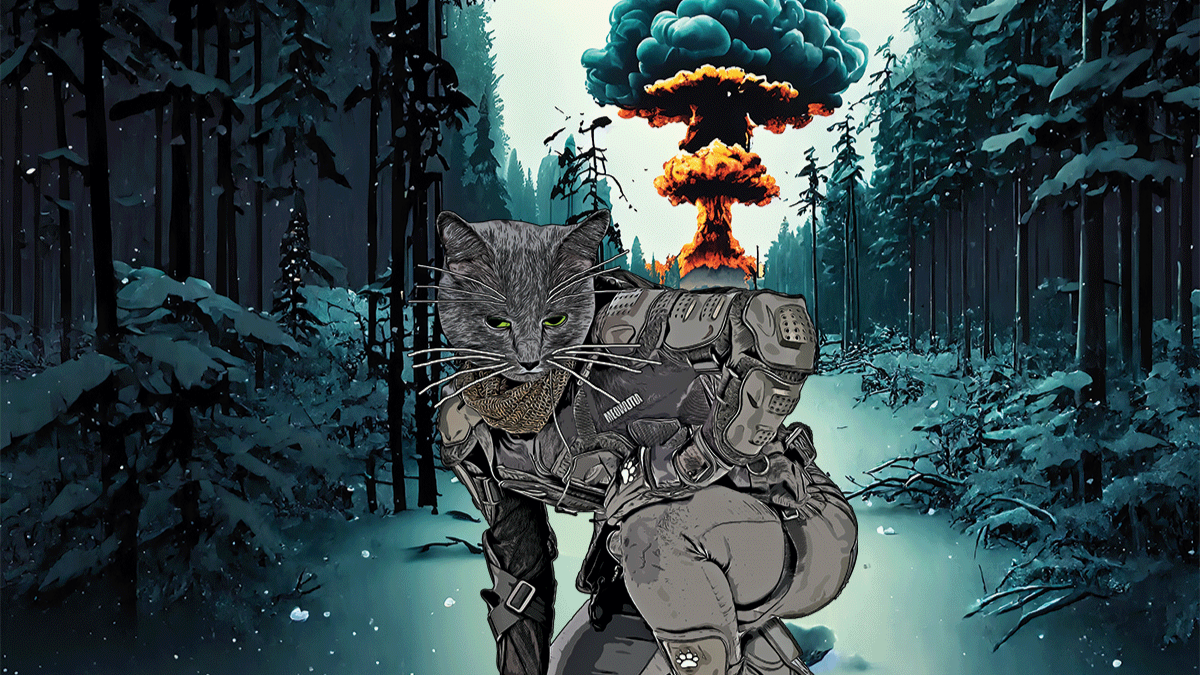
Cat-Themed Streetwear: A New Wave of Graphic Apparel
A new wave of cat-themed streetwear is emerging—blending graphic apparel with darker storytelling, skate culture, and post-apocalyptic design.
Cat-themed clothing has existed for years—but it’s never looked like this.
Traditionally, cat apparel has been playful, soft, or comedic. But a new wave of streetwear is changing that—blending feline imagery with darker, more aggressive themes pulled from skate culture, underground fashion, and dystopian storytelling.
The Meowlitia sits at the front of that shift.
Instead of treating cats as mascots, The Meowlitia presents them as operators.
Soldiers. Survivors. Leaders.
In this world, cats aren’t accessories—they are the last organized resistance against an alien extinction event.
Characters like Little Cat aren’t just designs printed on fabric. They are part of a structured chain of command, leading units through destroyed cities and hostile territory.
This approach transforms cat-themed streetwear into something entirely different:
Narrative-driven
Character-focused
Built with continuity
It also aligns naturally with skateboarding culture, where identity and visual storytelling have always played a role in what people wear.
For fans of unique graphic tees, this creates a deeper connection.
You’re not just buying a shirt.
You’re stepping into a world.
And as more brands try to enter the space, few offer the level of depth, consistency, and creative direction that The Meowlitia continues to build.